
Horse
Interpretation of a fragment of the mosaic "Horse with Saddle", 5th–6th century AD, Art Institute of Chicago
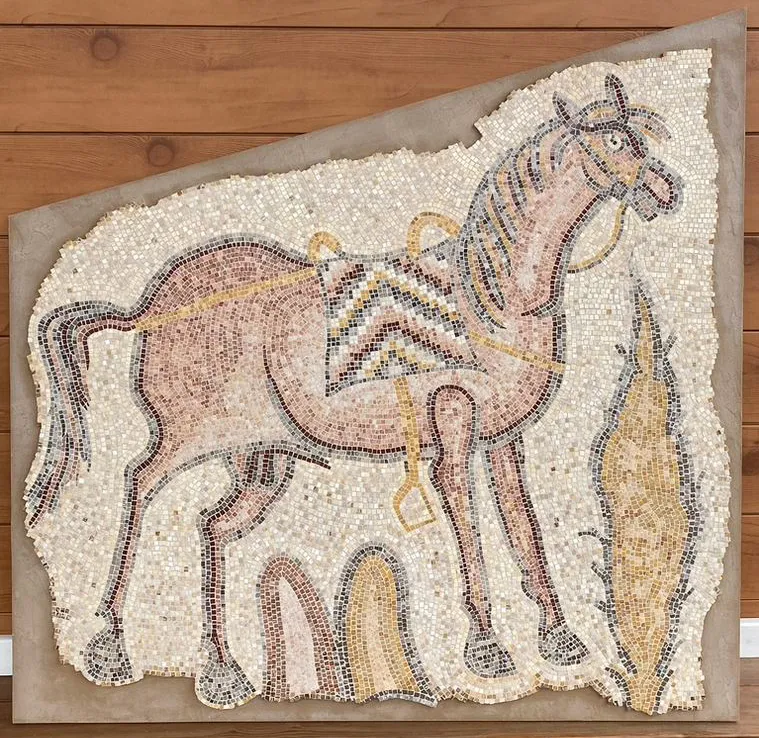
In every culture — from the Scythian steppes to the temples of Hellas — the horse was more than an animal. It appeared wherever a human being needed to cross a boundary: between earth and sky, life and death, fear and action.
The horse is connected with the sun, the road, martial valor, and passage between worlds. As a chthonic being, it knows the way to the underworld; as a solar image, it carries movement, light, and vital force. In myths and religious traditions, it often leads where a person does not yet dare to go. It carries the hero, accompanies the soul, and leads the rider through a space where ordinary human will may lose its bearings.
But the horse is not only an external force. It is an image of inner energy that cannot be subdued by brute force. It can only be felt, heard, entered into rhythm with. A rider who first breaks the horse’s will with reins and spurs will never receive that “true gait” born from rhythm. The horse is the only animal that allows a human being, on its own body, to learn how to direct a force greater than conscious control, submitting not to command, but to intention through the legs, weight, and breath.
That is why the horse reminds us of the part of ourselves that knows direction not through reasoning, but through deep bodily knowledge. When the mind is noisy, doubtful, sorting through options and losing its ground, it is this very force that helps us return to movement. Not to fuss, not to flight, not to struggle for its own sake, but to the true gait — the one born from the union of instinct, spirit, and inner will.